
Asset or Liability? The Moral Obligation of Physical Fitness
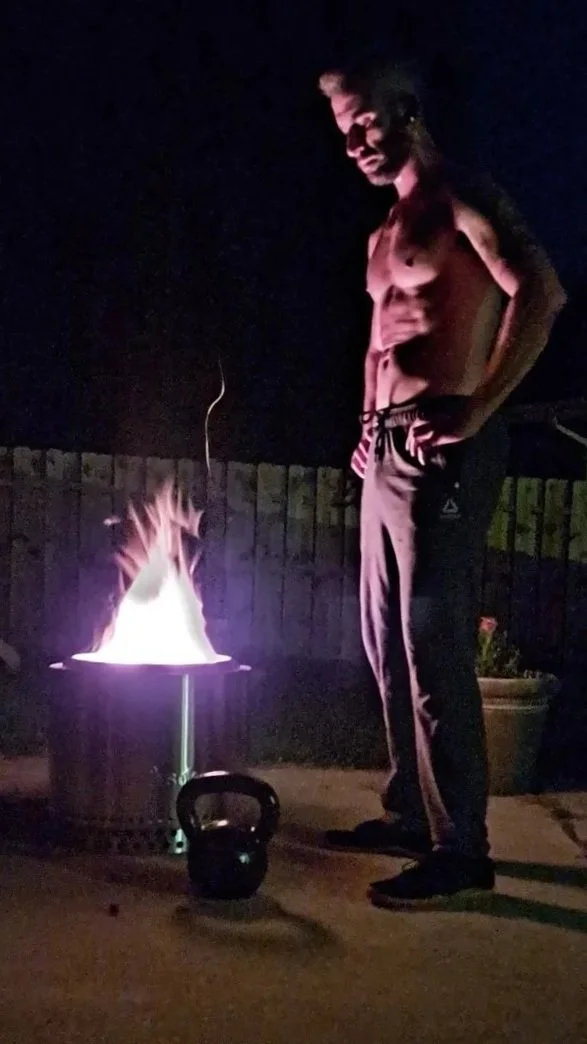
A primitive night training setup featuring a classic black iron kettlebell resting on a concrete pad right next to a blazing fire pit. The warm glow of the fire cuts through the darkness, illuminating the rugged workout gear and highlighting an ancestral approach to physical capability.
Physically speaking, are you an asset or a liability?
What if I told you that you have a direct moral obligation to God, your family, and your community to be physically capable? That might sound intense, and maybe even a little uncomfortable, but hear me out. I believe we have a duty to become as strong, mobile, durable, and capable as we reasonably can because we never know when we will be called into action. This goes beyond carrying dog food, hauling solar salt down the basement stairs, or moving furniture without throwing out your back. Those things matter, but I’m talking about the moments that matter most.
If your child needed you, could you carry them? If you had to sprint, climb, crawl, or move across rough ground without the perfect shoes and perfect conditions, could you do it? If someone you love needed help, would your body be ready to serve, or would your body become one more problem in the emergency? I’m not asking you to become a Navy SEAL, live in fear, or pretend everyone has the same physical capacity. Injury, illness, disability, age, and life circumstances are real. I’m asking you to think about stewardship, taking whatever capacity you have been given and refusing to let comfort quietly steal it from you.
Most of us live in a level of comfort our ancestors could hardly imagine. Food is available on demand, climate control is normal, transportation requires almost no physical effort, and help is usually one phone call away. That comfort is a blessing, but it can also become a trap. We start to believe the modern world has removed our need to be capable. We outsource our strength, our endurance, and our resilience, then one day life asks something of us and we realize our body has been slowly negotiating against us.
Fitness, at its core, is about capability. Can you carry? Can you climb? Can you walk for miles? Can you get off the floor? Can you lift something awkward? Can you move quickly when life demands it? Can your body serve the people you love? That is the real world fitness test. Not mirror muscles. Not gym selfies. Capability.
The Debt of Survival, Our Hunter Gatherer Roots
Look closely at your own reflection. The only reason you are here today, breathing air and reading these words, is because someone in your past survived. For most of human history, physical capability was not a hobby, a New Year’s resolution, or something people squeezed in when the calendar looked friendly. It was life or death.
Our ancestors had to walk long distances, carry awkward loads, hunt, gather, climb, dig, build, fight, flee, endure cold, handle heat, and recover from conditions most of us would consider a full blown crisis. They did not have recovery boots, ergonomic chairs, grocery delivery, or a chiropractor on speed dial. They had their bodies, and their bodies had to work.
If enough of your ancestors had been unable to move, adapt, endure, or protect, your family line would have ended long before it reached you. That does not mean every person had to be elite. It means capacity mattered. Usefulness mattered. Resilience mattered. To inherit that hard won biology and let it rust in comfort is unfortunate, and I would argue it is poor stewardship. You were built from survivors, and the least we can do is live like that means something.
Honoring the Divine Design
I believe we were created in God’s image, and that means the body is more than a disposable container we drag around until heaven. It is part of the life we were given. It is part of how we work, serve, protect, worship, and love others. In 1 Corinthians 6:19 to 20, Paul reminds believers that the body is a temple of the Holy Spirit and that we are called to honor God with our bodies.
That matters. When taking care of your body is rooted in stewardship, it is not vanity, selfishness, or shallowness. Of course, we should be careful here. The body can become an idol just like anything else, and chasing appearance for its own sake misses the point entirely. The goal is not to be impressive. The goal is to be faithful with what you have been given, strong enough to serve, mobile enough to move, durable enough to endure, and capable enough to help.
That is a very different mindset than chasing a beach body. It asks a better question. Am I preparing my body to be useful in the life God has actually placed in front of me?
Lessons from History, Fitness as a Duty
This idea is not new. Across cultures and eras, wise societies understood that physical capability was connected to personal responsibility, civic duty, and human development. In ancient Greece, physical training was woven into education and citizenship. The gymnasium was a place where the body, mind, and character were developed together, and physical excellence was connected to discipline, courage, and service.
Ancient Chinese medical traditions also recognized movement as essential for health and longevity. Exercise, martial practices, and medical gymnastics were viewed as ways to preserve health, build resilience, and maintain readiness. During the Renaissance, humanist educators brought physical education back into the larger conversation of forming the whole person. Games, riding, fencing, and movement were treated as part of developing a capable, well rounded human being.
Later, as industrial life pulled people away from physical labor and into more sedentary work, organized fitness movements began to grow. Gymnastics clubs, physical culture movements, and organizations like the YMCA helped reintroduce structured movement into modern life. Different cultures, different eras, same basic truth. Humans decline when we stop moving, and we were never meant to spend most of our lives sitting, scrolling, snacking, and slowly becoming less useful to ourselves and others.
You Do Not Need Elite Fitness
I’m not asking you to chase six pack abs, a 500 pound deadlift, or run shirtless through the woods yelling motivational quotes at squirrels. Start with the basics. Can you walk several miles? Can you carry heavy groceries without falling apart? Can you get up and down from the floor? Can you squat, hinge, push, pull, crawl, climb, and balance? Can you sprint if you absolutely had to?
Can you carry a child, help an injured spouse, shovel out a neighbor, drag something heavy, or handle a long day without your body quitting before your responsibilities do? That is where this starts. Not with perfection, but with usefulness.
The beautiful part is that the body responds quickly when you give it a reason to wake back up. Walk daily. Lift heavy things. Sprint once in a while. Get outside. Train your feet. Build your grip. Eat real food. Sleep like it matters. Do the simple things long enough that your body starts remembering what it was designed to do, because it does remember.
The Choice Is Yours
We were built to move, endure, adapt, and protect. Modern comfort has made it easy to forget that, but our biology, our history, and our faith all point us back to the same truth. Your body is not an ornament or a side project. It is part of how you serve.
So stop treating fitness like something you will get around to when life slows down, because life may not slow down. The moment you need your body most probably will not show up on your calendar first. The choice is yours. You can become harder to kill, harder to break, and more useful to the people around you, or you can let comfort make the decision for you.
Asset or liability?
