
Hooked on Comfort: What the Nike Mind Shoe Teaches Us About Modern Fitness
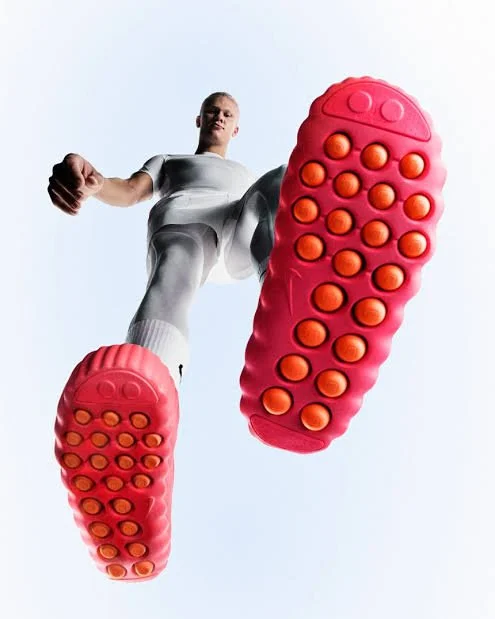
Close-up of the Nike Mind shoe's textured sole featuring 22 sensory foam nodes designed to stimulate the feet.
Admittedly, I don’t pay too much close attention to shoes since I seldom wear them, however a new shoe by Nike caught my eye. Apparently, the latest breakthrough in footwear is helping people feel their feet again. Nike’s new Mind series uses 22 independently moving foam nodes designed to press into the soles, stimulate sensory receptors, and activate sensory areas of the brain. According to Nike, the technology took more than a decade to develop, which is quite a milestone, considering it took a team of scientists over ten years to recreate a version of what human beings once received every day for free by simply walking barefoot across rocks, dirt, roots, grass, and uneven ground.
That is not a criticism of the science itself, as Nike is absolutely right about something incredibly important. The feet are sophisticated sensory organs, and the rich information they send to the brain directly affects our balance, movement, body awareness, and how we interact with our environment. The irony, however, is that we spent decades surrounding our feet with thicker foam, systematically reducing their contact with the ground, only to congratulate ourselves for inventing a high-tech shoe that gives some of that lost sensation back. We have officially engineered an expensive solution to a problem we helped create.
This is where the Nike Mind shoe connects to the larger question of modern capability. Modern society keeps removing effort, discomfort, and direct contact with reality, then selling us products designed to imitate what we lost. While a controlled sneaker lab can simulate physical stimulation, it cannot fully replace the natural ground beneath your feet.
What Nike Got Right
The soles of your feet are densely supplied with sensory receptors that help your brain detect pressure, movement, texture, and changes in the surface beneath you. This sensory information contributes directly to your balance, gait, body position, and your immediate ability to respond to the environment. Changing or reducing this stream of information can alter how the body controls movement. Because evidence shows that adding texture beneath the feet can influence sensory awareness and postural control, Nike is not imagining the relationship between the soles of the feet and the brain.
Rather than dismissing the genuine science behind sensory footwear, we should be asking a much deeper question: how did we become so disconnected from the ground that basic physical stimulation now needs to be manufactured, branded, and sold back to us in a box?
The Footwear Arms Race
Over the last several decades, athletic footwear has entered an aggressive arms race of comfort. Shoes have become softer, thicker, and increasingly padded under the cultural assumption that more foam means more protection, and that the less we feel the ground, the safer and more comfortable we will be. However, feeling less impact does not necessarily mean your body is experiencing less physical force.
Cushioning changes how landing feels, but it does not necessarily reduce the forces your body must manage. In some studies, highly cushioned shoes have actually increased impact forces, loading rates, and leg stiffness compared with more traditional footwear. Research comparing barefoot and conventional running shoes has also found that runners who land on the forefoot while barefoot can experience smaller impact forces than runners landing on a cushioned heel. I experience this first hand running in my barefoot shoes or with no shoes at all.
The difference is not simply the absence of a shoe. Without thick foam muting the feedback from the ground, the body is more likely to shorten the stride, increase cadence, and land more carefully. The cushion can make a harder collision feel deceptively gentle, allowing a runner to strike the ground in a way that would be difficult to tolerate barefoot.
This does not mean every cushioned shoe is inherently harmful, but it highlights that immediate comfort and long-term protection are not always the same thing. When we confuse reduced sensation with reduced force, we may feel protected while actually placing more force through the body.
The Sensory Paradox
This functional disconnect is what makes the Nike Mind shoe so interesting. The 22 moving nodes are designed to increase stimulation beneath the foot, while the thick platform continues to filter the actual surface below it, meaning you feel more inside the shoe but significantly less of the world outside it. While that manufactured stimulation may have some value, it cannot reproduce the rich variety of gravel, roots, dirt, sand, and grass. Natural surfaces do more than press against the sole; they require the foot to dynamically flex, stabilize, grip, and adjust with every step. Nike is trying to improve communication between the feet and the brain, and while that communication matters, we have to question whether adding more technology between the foot and the ground is truly the best way to restore it.
The Body Was Not Built Broken
For most of human history, movement happened across surfaces that were rarely flat, padded, or predictable, and our feet had to respond to the environment because daily life gave them no other choice. We were made in God's image, and we were not given broken little feet that were incapable of functioning without thick foam, rigid arch supports, and constant external correction; rather, we gradually conditioned them to expect and depend on those things.
The human foot is a masterpiece of design containing 26 bones, 33 joints, and a complex network of muscles, tendons, ligaments, and sensory receptors built to move, adapt, and communicate with the ground. That capacity can certainly weaken when it is rarely used, but it is not gone.
Give Your Feet Something to Do
To begin restoring this capability, you do not need to throw away every pair of shoes you own or start running barefoot down a sharp gravel road. Feet adapt gradually just like the rest of the body, and they require progressive exposure rather than sudden punishment. You can start by spending more time barefoot at home, walking through the grass, or standing on sand, dirt, and smooth stones. When protection is needed, choose foot-shaped shoes that allow your toes to spread and your feet to flex naturally.
Begin with just a few minutes a day and build up your tolerance gradually. Some muscular fatigue is entirely expected when your feet begin doing real work again, but sharp or persistent pain is always a sign to back off and reassess. The ultimate goal is not to prove how tough your feet are, but to restore their natural ability to sense, move, and adapt.
Step Outside the Lab
Nike spent more than a decade developing a shoe based on the idea that stimulation beneath the feet can influence the brain, which simply confirms that the foot-to-brain connection is worth paying attention to. However, we should not need another expensive product to experience the benefits of that relationship. While a shoe can provide a repeated, simulated pattern of stimulation, natural terrain gives your body an ever-changing problem to solve.
We should use footwear as a temporary protective tool rather than permanent insulation from the world beneath us. Step outside, find some uneven ground, and take off your shoes when it is safe to do so. Let your toes spread, your arches work, and your feet receive genuine, unfiltered information they can actually use to build real stability. The technology may be new, but the solution is not.
See you out in the mud.
